
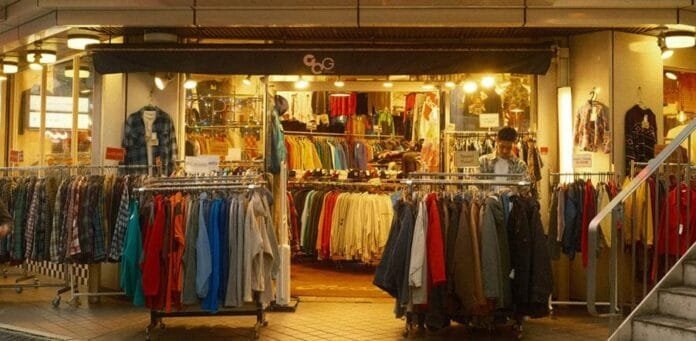
India’s fashion industry is built on the strength of thousands of local retailers.
From independent fashion stores and multi-brand outlets to regional fashion chains, these businesses have been serving customers for decades. They understand local fashion trends, customer preferences, seasonal demand, and the unique buying behavior of their cities better than anyone else.
Yet despite having quality products and loyal customers, many local fashion retailers face a common challenge.
Digital visibility.
Over the last decade, e-commerce has changed how consumers discover and purchase fashion. Large online marketplaces have invested heavily in technology, logistics, marketing, and customer acquisition, making it increasingly difficult for local retailers to compete online.
While customers can easily browse products from large national brands, many are completely unaware of the fashion inventory available in stores just a few kilometers away from their homes.
According to the founders of Slazzy, this is one of the biggest inefficiencies in the fashion ecosystem today.
Thousands of retailers have inventory.
Thousands of customers are looking for products.
But there is no efficient system connecting local demand with local supply.
This challenge inspired the creation of Slazzy.
Founded by Shubham Gopal and Mansi Bajpai, Slazzy is building a hyperlocal fashion commerce platform designed to help local retailers participate in the digital economy while improving convenience for customers.
The founders believe that local retailers should not be forced to compete against technology.
Instead, technology should empower them.
Unlike traditional marketplace models that rely heavily on centralized warehouses and inventory ownership, Slazzy follows an asset-light approach by utilizing inventory that already exists in local stores.
The company acts as a technology and distribution layer between retailers and customers.
When customers browse products through the Slazzy platform, they gain access to inventory available across nearby partner stores.
Once an order is placed, the retailer fulfills the order directly from existing inventory, and delivery partners ensure the product reaches the customer quickly.
This model creates value for all participants in the ecosystem.
For customers, it means faster access to fashion products without waiting several days for delivery.
For retailers, it means increased visibility, additional sales opportunities, and access to customers they may never have reached through traditional offline channels.
For cities, it creates a more connected retail ecosystem where local businesses can benefit from digital commerce rather than being left behind by it.
One of the major reasons Slazzy chose this approach is because fashion differs significantly from other categories such as groceries.
A grocery dark store can stock a limited number of products because customer demand is relatively predictable.
Fashion, however, is much more complex.
Every product has multiple sizes.
Multiple colors.
Different styles.
Different fits.
New inventory arrives regularly.
Trends change rapidly.
Customer preferences vary significantly.
Most customers are not simply looking for “a shirt” or “a dress.”
They are looking for a specific style, specific fit, specific brand, or sometimes products from a store they already trust.
Trying to replicate this variety inside a centralized warehouse would require massive inventory investment and create significant operational complexity.
The founders saw a different opportunity.
Instead of building new inventory infrastructure, they decided to unlock the inventory infrastructure that already exists.
Every city already has hundreds of fashion stores.
Every store already carries products ready for purchase.
The challenge is making that inventory discoverable.
Slazzy solves this problem through technology.
By connecting local retailers to a digital platform, the company enables stores to become part of a larger hyperlocal fashion network while retaining ownership of their inventory.
This approach allows retailers to grow digitally without making substantial investments in technology, warehousing, or customer acquisition.
According to the founders, the future of fashion commerce is not about replacing local businesses.
It is about helping them grow.
The company believes that local retailers will continue to play a critical role in India’s fashion industry, and technology should be used to strengthen their position rather than weaken it.
Starting from Lucknow, Slazzy has already partnered with dozens of fashion retailers and continues to expand its network.
The company is now preparing for future growth while working toward a larger vision.
A future where every local fashion retailer can participate in digital commerce.
A future where customers can discover products from nearby stores instantly.
And a future where technology bridges the gap between local inventory and local demand.
Through its hyperlocal approach, Slazzy is not just building a fashion delivery platform.
It is building a digital growth engine for local fashion retailers across India.
Playstore- https://play.google.com/store/apps/details?id=com.slazzy&pcampaignid=web_share
App store- https://apps.apple.com/in/app/slazzy/id6762513597

